Valle Grande Webcam – Valles Caldera, New Mexico
Valle Grande Webcam – Valles Caldera National Preserve
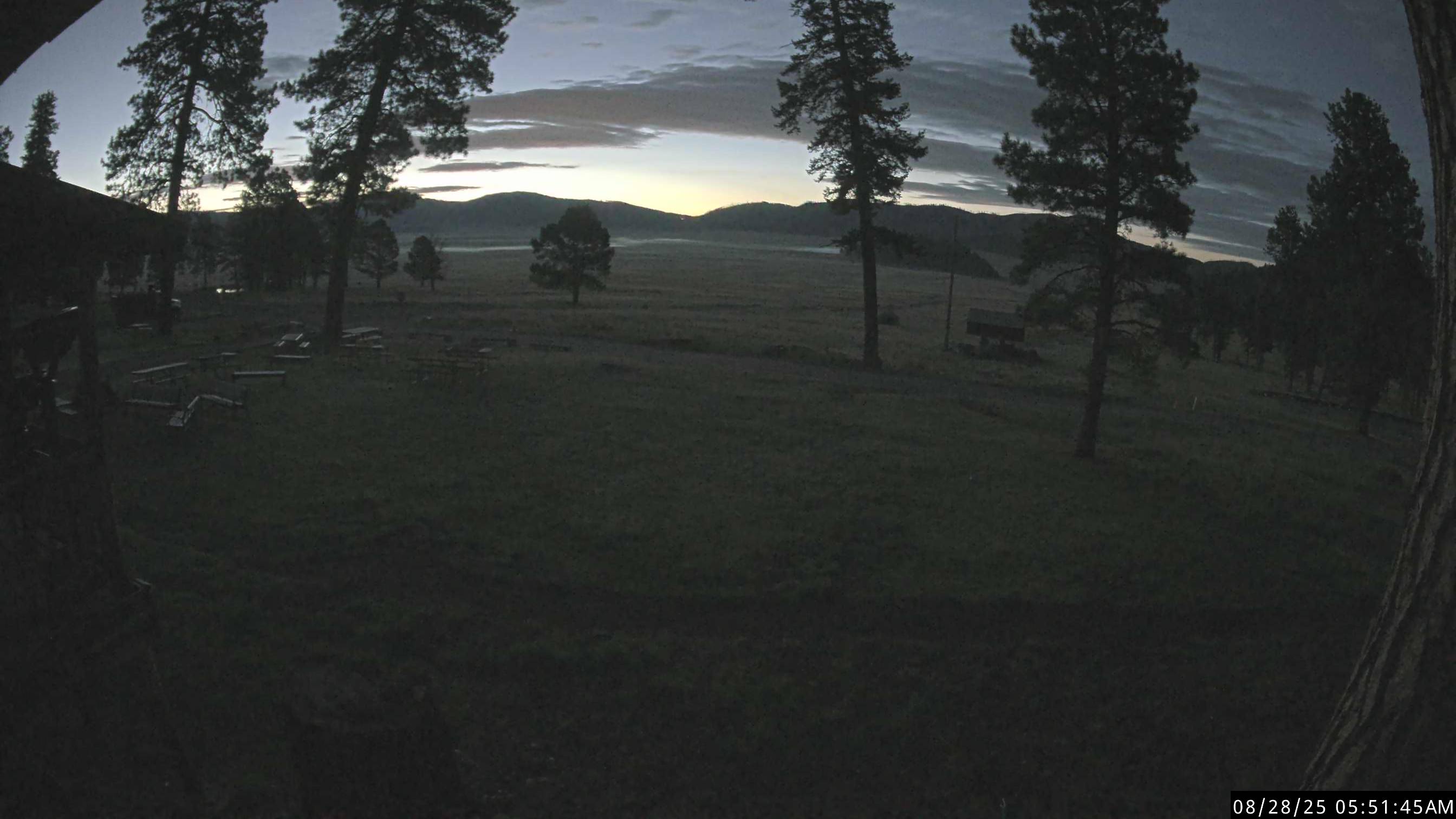
The Valle Grande Webcam provides a wide view across the largest grassland valley in Valles Caldera National Preserve. The camera is located at the Volcano Discovery Center in the historic Cabin District, along the northern edge of Valle Grande at approximately 8,700 feet above sea level.
The current image includes the visitor area and ponderosa pines in the foreground, with the enormous open valley spreading toward the volcanic hills and forested caldera rim. A park road crosses the meadow below the camera. Vehicles, visitors and occasional wildlife may appear in the view.
This webcam is especially useful for checking weather, visibility and seasonal conditions inside the caldera. Summer brings green grass, afternoon clouds and thunderstorms. By autumn, the meadow turns shades of gold and brown. Snow can cover the valley during winter, while spring often produces a mixture of lingering snow, mud and emerging grass.
Valle Grande is also important wildlife habitat. Elk frequently gather in the preserve’s open meadows, particularly around dawn and dusk. Individual animals may be difficult to distinguish in the wide image, but larger groups can sometimes be spotted moving across the valley.
Because the caldera sits at high elevation, conditions can differ substantially from those in Los Alamos, Santa Fe or lower portions of the Jemez Mountains.
Watch Valle Grande Through the Seasons
Valle Grande changes more dramatically than its open terrain initially suggests. During the summer growing season, the grassland becomes green while monsoon storms build over the surrounding mountains. Clouds can move rapidly across the caldera, producing rain, hail, lightning and sudden drops in temperature.
Autumn brings colder mornings and golden grass. This is also an active season for elk, whose bugling may be heard across the preserve during the fall breeding season.
Snow transforms Valle Grande into a broad white basin during winter. The open meadow makes drifting snow easy to see, while shaded roads and forest edges may remain icy. Fog and low clouds occasionally hide the surrounding volcanic hills completely.
In spring, melting snow feeds the East Fork Jemez River and other streams winding through the grasslands. The valley may appear brown and wet before warmer conditions restore its green color.
The webcam can show visible snow and weather at the Cabin District, but it cannot confirm whether every park road or trail is open. Backcountry access changes with seasons, precipitation and road conditions.
About Valles Caldera National Preserve
Valles Caldera National Preserve protects most of a roughly 13-mile-wide volcanic caldera in the Jemez Mountains of northern New Mexico. The preserve encompasses approximately 88,900 acres of high-elevation grasslands, forested volcanic domes, streams and mountain slopes.
The caldera was created by a massive volcanic eruption approximately 1.25 million years ago. After the underground magma chamber emptied, the overlying land collapsed and formed a broad circular depression. Later volcanic activity produced the rounded domes rising from the caldera floor.
Valle Grande is only one portion of this much larger volcanic system. Its open grassland occupies the southeastern side of the caldera and is the area most visible from New Mexico State Route 4. Redondo Peak, the caldera’s central resurgent dome, rises to 11,254 feet and is the preserve’s highest point.
Water collects within the caldera and feeds the East Fork Jemez River. The combination of streams, broad meadows and surrounding forests supports elk, mule deer, coyotes, black bears, mountain lions and numerous bird species. Valles Caldera is particularly well known for its large elk population.
The landscape is also an ancestral homeland and culturally important gathering place for numerous Native American pueblos and tribes. Obsidian from the caldera was collected and worked for thousands of years, and artifacts made from it have been found across a wide area.
More recently, the property became part of the Baca Ranch and supported livestock grazing and other commercial activities. Historic structures in the Cabin District preserve part of that ranching history. The Ranch Foreman’s Cabin was later used as Walt Longmire’s home in the television series Longmire.
Valles Caldera became a national preserve in 2000 and transferred to National Park Service management in 2015.
Wildlife to Watch for in Valle Grande
Elk are the signature wildlife species of Valles Caldera. The preserve’s extensive grasslands provide feeding habitat, while nearby forests offer cover. Large herds can gather in the open valleys, although their distance from the camera may make them appear as small dark shapes.
Early morning and evening generally provide the best opportunities to see elk. Autumn is especially interesting because mature bulls bugle and compete during the breeding season. Visitors should observe from a distance and never approach or attempt to move through a herd.
Coyotes also use Valle Grande. They may travel alone, in pairs or occasionally in small family groups. During elk-calving season, coyotes have been observed hunting cooperatively within the preserve.
Mule deer are more likely near forest edges, while black bears may cross open areas as they move between wooded slopes. Prairie dogs occupy portions of the preserve, and bald eagles, golden eagles, hawks and other raptors hunt over the grasslands.
The webcam is not close enough for dependable species identification. Its value comes from showing the scale and condition of the habitat—and occasionally catching larger animals or herds moving across it.
Planning a Visit to Valles Caldera
The preserve is located along New Mexico State Route 4, approximately 18 miles west of Los Alamos and 22 miles northeast of Jemez Springs. The main entrance leads into Valle Grande and the Cabin District shown by the webcam.
Visitors can explore the preserve by hiking, bicycling, horseback riding, fishing, skiing and snowshoeing. Access to the front-country portion of Valle Grande is simpler than travel into the preserve’s interior.
Seasonal backcountry vehicle access requires a separate pass and follows a narrow gravel route. Snow, mud, washboarding and storms can affect the road, and high-clearance vehicles are recommended for backcountry travel.
Summer afternoons frequently bring thunderstorms. Winter travel can involve blowing snow, ice and drifting along State Route 4. Bring layers and prepare for rapid weather changes in every season.
Why Use the Valle Grande Webcam?
- Check current weather inside Valles Caldera.
- See visible snow around the Cabin District.
- Watch the grassland change through the seasons.
- Look for elk or other wildlife in the valley.
- Monitor clouds and visibility across the caldera.
- Preview conditions before driving through the Jemez Mountains.
- Observe activity near the Volcano Discovery Center.
- Compare conditions at 8,700 feet with lower-elevation communities.
Valle Grande Webcam FAQs
Where is the Valle Grande Webcam located?
The camera is at the Volcano Discovery Center in the Cabin District of Valles Caldera National Preserve, New Mexico.
What does the webcam show?
It shows the visitor area in the foreground and a broad view across Valle Grande toward the volcanic hills and forested rim of the caldera.
Is the webcam live?
The webcam displays a current still image rather than continuous video. The NPS page refreshes the image periodically.
What is the elevation of the webcam?
The Volcano Discovery Center sits at approximately 8,700 feet above sea level.
Can elk be seen on the webcam?
Elk may appear in Valle Grande, especially around dawn and dusk. Because the camera covers a wide area, distant animals may look like small dark shapes.
Is Valle Grande the entire caldera?
No. Valle Grande makes up only about 15 percent of Valles Caldera. The complete caldera is approximately 13 miles across and contains several large valleys and volcanic domes.
Does Valles Caldera receive snow?
Yes. Its high elevation brings cold winters and regular snow. Snow, ice and drifting can affect park roads and State Route 4.
Can visitors drive into the caldera?
Visitors can drive to the main visitor areas in Valle Grande when open. Driving farther into the backcountry is seasonal, requires a vehicle pass and depends on road conditions.
More New Mexico Webcams
See More New Mexico
Explore more live views across the Land of Enchantment with our New Mexico Webcams, New Mexico Mountain Webcams, New Mexico Traffic Webcams and National Park Webcams.