Mount Washburn Webcam in Yellowstone Park

Webcam View from the Summit of Mount Washburn
Southwest view from Mount Washburn in Yellowstone National Park webcam
The Mount Washburn webcams in Yellowstone National Park provide high-elevation views of the surrounding landscapes, capturing real-time footage of sweeping mountain vistas, weather conditions, and, occasionally, wildlife. Positioned near the summit of Mount Washburn at around 10,000 feet, these webcams are crucial for both public viewing and park management. They help the National Park Service monitor fire activity, weather changes, and visibility across large stretches of the park. These webcams are especially valuable during fire season, as they give park officials a view of potential smoke or fire sources from a strategic vantage point. Additionally, they allow virtual visitors to experience Yellowstone’s beauty from one of its highest points, giving a unique perspective on the park’s rugged topography and seasonal changes.
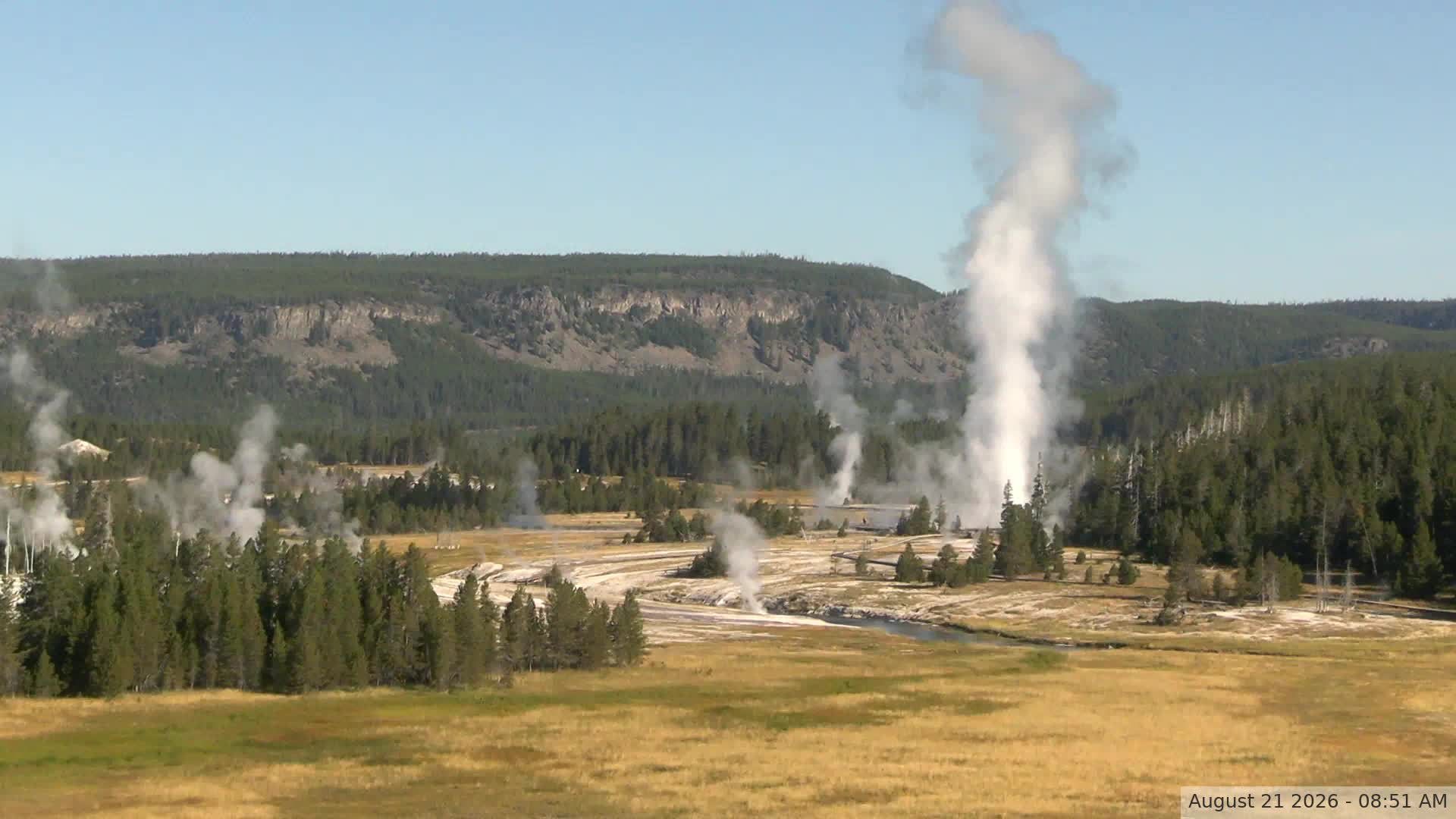
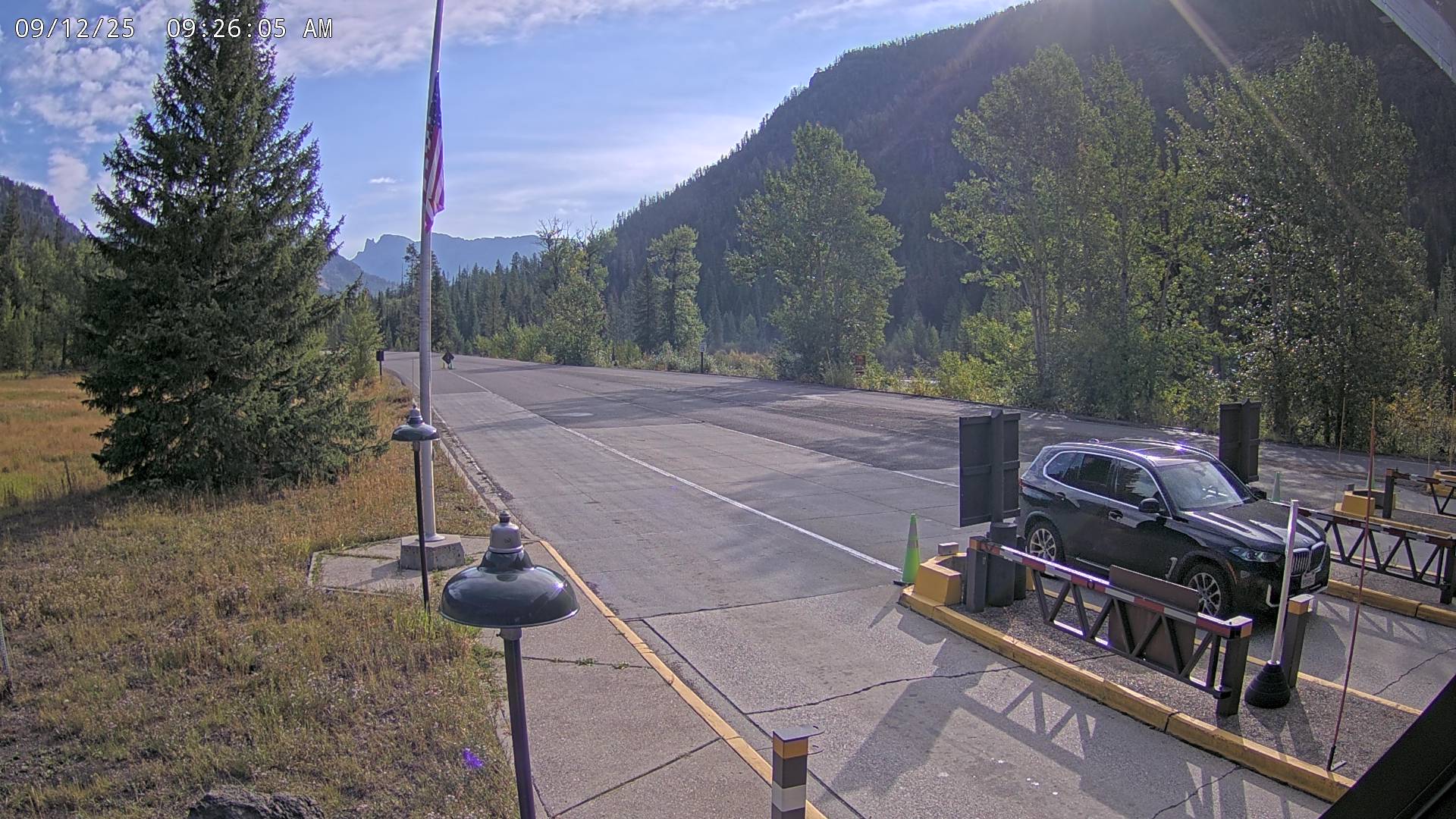
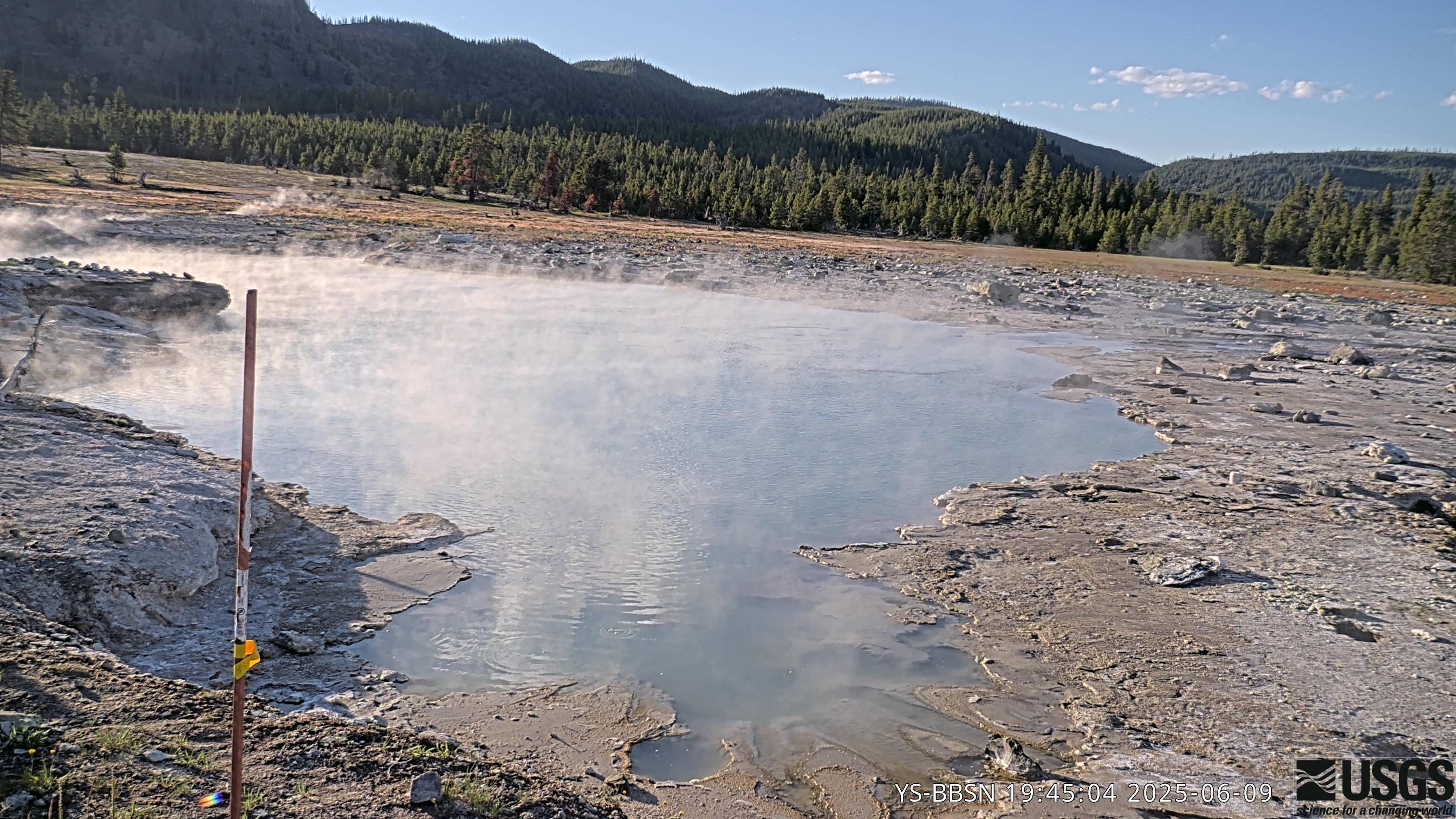

Mount Washburn
Mount Washburn is one of Yellowstone National Park’s most famous peaks, offering visitors a chance to experience breathtaking views, wildlife sightings, and a piece of the park’s history. Rising to an elevation of approximately 10,243 feet, Mount Washburn is located in the Washburn Range, a central mountainous area in the park. It is named after Henry Dana Washburn, leader of the 1870 Washburn-Langford-Doane Expedition, an early exploration team that significantly contributed to Yellowstone’s designation as the first national park in the world.
The summit of Mount Washburn is accessible by two main trails: the Dunraven Pass Trail and the Chittenden Road Trail, both of which lead hikers up a steady incline through open meadows and forests, offering scenic views along the way. These trails provide visitors with an opportunity to observe Yellowstone’s diverse flora and fauna, from wildflowers and hardy shrubs to mountain goats, bighorn sheep, and, occasionally, grizzly bears. The trails are well-maintained and moderately challenging, making Mount Washburn a popular choice for day hikes. During the hike, visitors often enjoy expansive views of the Grand Canyon of the Yellowstone, Hayden Valley, and even glimpses of the distant Teton Range on clear days.
At the summit, visitors find an old fire lookout tower that has since been repurposed for observational use. This tower is home to the Mount Washburn webcams, positioned to give sweeping views of the surrounding areas. The webcams serve as a tool for monitoring wildfire activity, especially during dry seasons when the risk of fire is elevated. Because the summit’s height provides visibility across significant portions of Yellowstone, the webcams can alert park officials to early signs of smoke or fire in remote areas. This early detection is essential for controlling wildfires and minimizing damage to the park’s ecosystems.
From the summit of Mount Washburn, the panoramic views extend across the vast landscapes of Yellowstone, offering a glimpse of the park’s varied terrain. To the east, hikers can view the Absaroka Range and Lamar Valley, while looking south offers views of the Yellowstone Caldera and, beyond that, the Teton Range. The summit’s unique vantage point allows for a rare, top-down perspective on some of Yellowstone’s most famous geothermal features, providing a sense of the park’s scale and diversity.
Mount Washburn’s high-altitude ecosystem supports a different array of plants and animals compared to lower elevations in the park. At the tree line, hardy shrubs and wildflowers bloom in the summer, creating a colorful display that contrasts with the rocky terrain. The presence of wildlife like bighorn sheep adds to the allure of the hike, as these animals are well adapted to the rugged environment. Bird species, including ravens and hawks, are often seen soaring at the summit, taking advantage of the updrafts created by the mountain’s elevation.
In addition to its recreational and environmental value, Mount Washburn holds historical significance within Yellowstone’s narrative. The mountain, named for an early explorer, is symbolic of the spirit of discovery and conservation that led to Yellowstone’s establishment as a national park. Today, the trails, fire lookout, and webcams on Mount Washburn stand as a testament to this history and the ongoing commitment to protect and share Yellowstone’s beauty. For visitors, a hike to Mount Washburn is an opportunity to connect with Yellowstone’s natural grandeur, observe its wildlife, and appreciate the park’s preservation efforts from one of its highest and most scenic viewpoints.
History of Yellowstone National Park
Yellowstone National Park, established on March 1, 1872, is the world’s first national park. Located primarily in Wyoming, with small sections extending into Montana and Idaho, the park spans over 2.2 million acres, showcasing a diverse landscape of geothermal wonders, dramatic canyons, alpine rivers, lush forests, and abundant wildlife. Yellowstone’s history is deeply intertwined with the Native American tribes who have lived in the region for thousands of years, and who consider the land and its features spiritually significant. Evidence of their presence is found in petroglyphs, artifacts, and ancient trails throughout the park.
The idea of creating a public, protected area came about in the late 1860s. The first detailed exploration of Yellowstone took place in 1871, led by Ferdinand V. Hayden, a geologist and surveyor who saw the potential for scientific study, as well as the immense beauty of the area. The findings from the Hayden Expedition, including paintings by artist Thomas Moran and photographs by William Henry Jackson, were instrumental in convincing Congress of Yellowstone’s value. These images gave Americans their first glimpse of Yellowstone’s dramatic landscape, capturing public attention and inspiring a new era of conservation.
With Congress convinced of the need to protect the land from private exploitation, President Ulysses S. Grant signed the Yellowstone National Park Protection Act, creating the park “for the benefit and enjoyment of the people.” As a result, Yellowstone became a model for future national parks worldwide, setting a precedent for preservation. Initially, however, there was no funding or management structure in place, leading to challenges in enforcing the park’s protection. Over the following years, poachers and souvenir hunters threatened the delicate ecosystem, and it wasn’t until the U.S. Army took control of the park in 1886 that efforts to preserve its wildlife and landscapes were properly implemented. The Army managed the park until 1918, when the newly established National Park Service took over.
One of the park’s most famous features is Old Faithful, a geyser that erupts at regular intervals, earning its name for its predictability. Yellowstone is home to the largest concentration of geothermal features in the world, including geysers, hot springs, fumaroles, and mud pots. The park lies atop a supervolcano, one of the largest active volcanic systems on Earth. Geologists have identified three massive eruptions over the past 2.1 million years, with the most recent occurring around 640,000 years ago. Today, the magma chamber beneath Yellowstone fuels its geothermal activity and is closely monitored by scientists, though another eruption is not expected anytime soon.
Yellowstone is also home to an incredible variety of wildlife, including bison, grizzly bears, elk, wolves, and bald eagles. The reintroduction of wolves in 1995 is a notable event in the park’s recent history, representing a major effort to restore ecological balance. The return of wolves helped regulate populations of other species, leading to healthier vegetation and riverbanks.
Today, Yellowstone draws millions of visitors annually and remains an enduring symbol of natural beauty and the conservation movement. Its unique features and commitment to preservation remind us of the importance of protecting our natural heritage for future generations.