Carlsbad Caverns Webcam – Natural Entrance & Bats
Carlsbad Caverns Natural Entrance Webcam
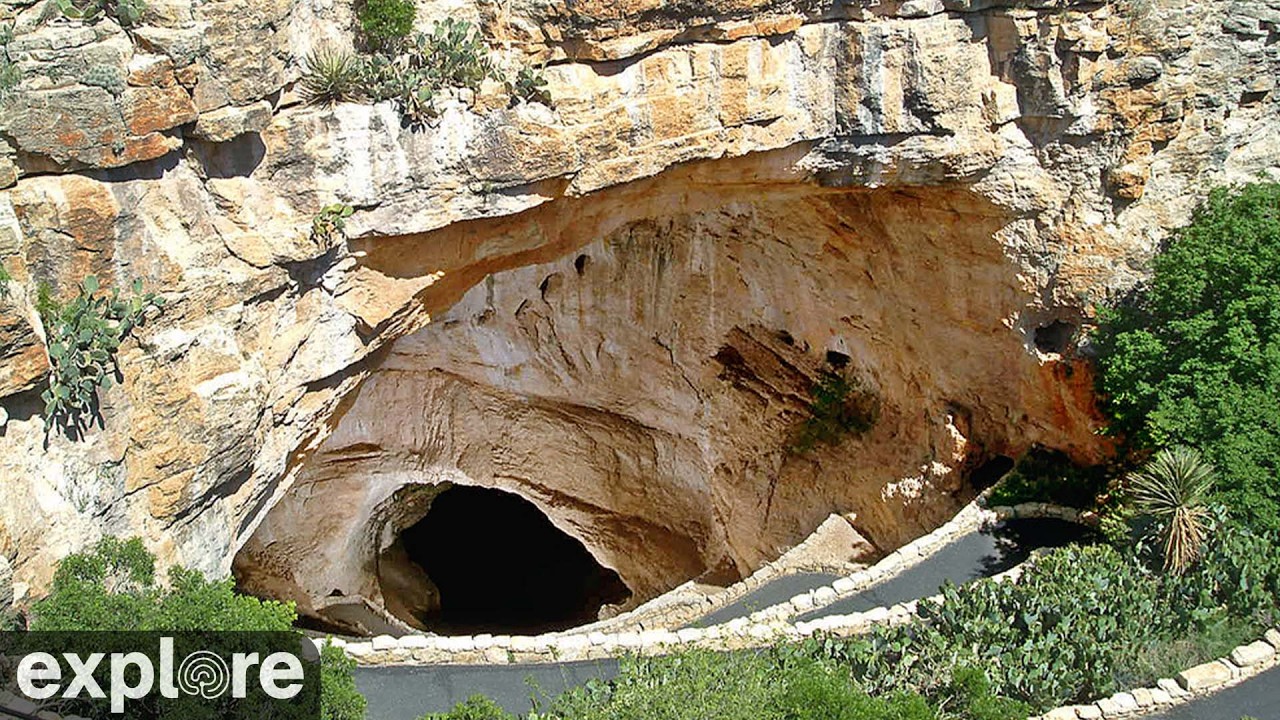
The Carlsbad Caverns Natural Entrance Webcam looks directly into the enormous opening where visitors descend into Carlsbad Cavern. Positioned above the entrance, the camera shows the winding paved trail, steep limestone walls and the dark mouth of the cave.
During the day, viewers can watch visitors beginning or completing the Natural Entrance Trail. The webcam also captures cave swallows flying around the entrance and changing sunlight across the surrounding Chihuahuan Desert terrain.
From spring through fall, the camera becomes a window onto one of the most remarkable wildlife events in any national park. Hundreds of thousands of Brazilian free-tailed bats may spiral out of the cave around sunset before dispersing across the region to feed on insects. Before dawn, returning bats can dive into the entrance at remarkable speeds.
The bat flight is easiest to see during the camera’s evening and early-morning views. Exact emergence times vary with sunset, weather and the behavior of the colony. Heavy rain and strong wind may delay or reduce activity.
Outside the primary bat season, the webcam remains useful for seeing current weather, visibility and activity around the Natural Entrance. The camera streams video through YouTube, although playback may occasionally be interrupted by weather or technical conditions at this remote location.
Watch the Carlsbad Caverns Bat Flight
The bats generally begin leaving near civil twilight, shortly after sunset. They spiral counterclockwise as they rise from the cave entrance, forming a stream that may continue for several hours when the colony is large.
The number of bats varies throughout the season. Brazilian free-tailed bats begin returning to the cavern during spring, and females give birth to their pups in early summer. By August and September, young bats are flying and migrants from colonies farther north may join the population. These months usually produce the largest and most impressive flights.
The bats leave the cave to hunt insects across the surrounding desert and agricultural areas. Some nursing females return during the night to feed their pups before leaving to forage again.
Morning returns can be just as interesting. Before sunrise, bats descend rapidly toward the entrance and fold their wings into steep dives. Individual bats are difficult to follow through the webcam, but the concentrated movement around the cave mouth can become clearly visible.
The camera provides a rare opportunity to observe this behavior remotely. Photography and electronic devices are prohibited during the in-person Bat Flight Program, making the webcam especially valuable for anyone who wants a recorded view.
About Carlsbad Caverns National Park
Carlsbad Caverns National Park protects more than 100 caves beneath the Guadalupe Mountains of southeastern New Mexico. The best known is Carlsbad Cavern, an immense limestone cave containing chambers, passages and formations created over millions of years.
Unlike caves formed primarily by mildly acidic surface water, Carlsbad Cavern was largely dissolved from below. Hydrogen sulfide rising from deep petroleum deposits mixed with groundwater to create sulfuric acid. That acid attacked the limestone and opened large underground chambers. Later, as the water table dropped and air entered the cave, dripping water began creating stalactites, stalagmites, columns and other formations.
The Big Room is the cavern’s most famous chamber and the largest single cave chamber by volume in North America. Visitors can reach it by elevator or by descending through the Natural Entrance shown on the webcam.
The 1.25-mile Natural Entrance Trail drops approximately 750 feet—roughly the equivalent of walking down a 75-story building. The route passes formations including Devil’s Spring, Whale’s Mouth and Iceberg Rock before connecting with the Big Room area.
The natural opening has also shaped the park’s human history. Indigenous people knew the area long before modern cave exploration. During the early 1900s, Jim White became associated with exploring and promoting the cavern. Guano mining brought workers into the cave before it received federal protection.
Carlsbad Cave National Monument was established in 1923, became a national park in 1930 and was designated a UNESCO World Heritage Site in 1995.
The camera location brings together the park’s two best-known features: the human route into the cavern and the seasonal migration of its enormous bat colony.
Above Ground and Below Ground at Carlsbad Caverns
The webcam shows only the beginning of a much larger underground landscape. Beyond the visible switchbacks, the Natural Entrance Trail descends through a series of increasingly dark passages before reaching the cavern’s main developed area.
Visitors choosing the Natural Entrance experience the transition gradually. Desert light fades, temperatures cool and the sound of the surface disappears. Those using the elevator arrive underground without seeing that transition but can explore the Big Room on a relatively level trail.
The Big Room route is also approximately 1.25 miles long and typically takes about 90 minutes. A shorter cutoff reduces the distance for visitors who do not want to complete the entire loop. Portions of the Big Room are accessible, while the steep Natural Entrance Trail is not.
Carlsbad Caverns National Park also protects Lechuguilla Cave, one of the world’s longest and deepest known limestone caves. It is reserved for scientific research and specialized permitted exploration rather than ordinary public tours.
Planning a Visit to Carlsbad Caverns
The park is located in southeastern New Mexico, approximately 20 miles southwest of White’s City and about 30 miles from Carlsbad. The final approach climbs into the Guadalupe Mountains from the desert below.
Timed-entry reservations are used for entry into Carlsbad Cavern and should be arranged before arriving. A reservation controls the entry time but is separate from the cavern admission ticket.
Visitors can descend through the Natural Entrance or use the elevator, depending on operating conditions. The Natural Entrance Trail is extremely steep and is not recommended for people with heart or respiratory conditions. Closed-toe shoes with reliable traction are a sensible choice because cave surfaces can be wet.
The cavern remains cool throughout the year, even when surface temperatures are hot. Bring a light layer and carry only plain water into the cave.
Seasonal Bat Flight Programs take place at the amphitheater near the Natural Entrance. Program timing varies with sunset and bat activity, so consult current NPS information before visiting.
Why Use the Carlsbad Caverns Natural Entrance Webcam?
- Watch bats emerge from Carlsbad Cavern around sunset.
- Look for bats returning shortly before sunrise.
- See the Natural Entrance and its winding trail.
- Observe visitor activity around the cave entrance.
- Watch cave swallows flying along the entrance walls.
- Check sky and weather conditions above the cavern.
- Compare bat activity at different points in the season.
- Experience a protected bat flight without disturbing the colony.
Carlsbad Caverns Natural Entrance Webcam FAQs
Where is the webcam located?
The camera is positioned above the Natural Entrance to Carlsbad Cavern in Carlsbad Caverns National Park, New Mexico.
What does the webcam show?
It shows the cave mouth, the switchbacking Natural Entrance Trail, surrounding limestone walls and the area where Brazilian free-tailed bats emerge.
Is the camera live?
Yes. The camera is delivered through a YouTube video player rather than as a periodically updated still image. Temporary interruptions may occur.
What is the best time to watch the bats?
Watch around sunset for the evening emergence and shortly before sunrise for returning bats. The exact timing changes with daylight, weather and bat behavior.
What months are best for watching bats?
The principal bat season runs from spring through fall. August and September generally bring the largest flights because young bats have begun flying and migrating bats may join the colony.
Can the webcam show every bat flight?
No. Darkness, weather, camera exposure and the direction taken by the bats can make some flights difficult to see. Bat activity also varies from night to night.
Can visitors walk through the entrance shown by the webcam?
Yes. The Natural Entrance Trail descends approximately 750 feet over 1.25 miles. It is extremely steep and is not accessible to wheelchairs.
Why are cameras prohibited during the in-person Bat Flight Program?
Light, noise and electronic activity can disturb the bats and interfere with the experience. Visitors must put away cameras, phones and other electronic devices during the program.
More New Mexico Webcams
See More New Mexico
Explore more live views across the Land of Enchantment with our New Mexico Webcams, New Mexico Mountain Webcams, New Mexico Traffic Webcams and National Park Webcams.