
Redwood National and State Parks Webcams
Explore Redwood National and State Parks webcams for live views of Northern California’s remarkable redwood country. Webcams in and around the parks can provide a real-time look at current weather, fog, visibility, forest conditions, coastline, and the rugged landscapes surrounding the world’s tallest trees.
Redwood National and State Parks stretch along the Northern California coast, protecting ancient coast redwood forests along with rivers, prairies, beaches, and wild Pacific shoreline.

Live Redwood National and State Parks Webcams
Watch webcam views from Redwood National and State Parks and the surrounding redwood region. Each camera provides a look at conditions from its specific location, so weather seen on one webcam may be very different from conditions elsewhere within the parks.
Coastal fog, rain, elevation, and distance from the ocean can create significant differences across the region.
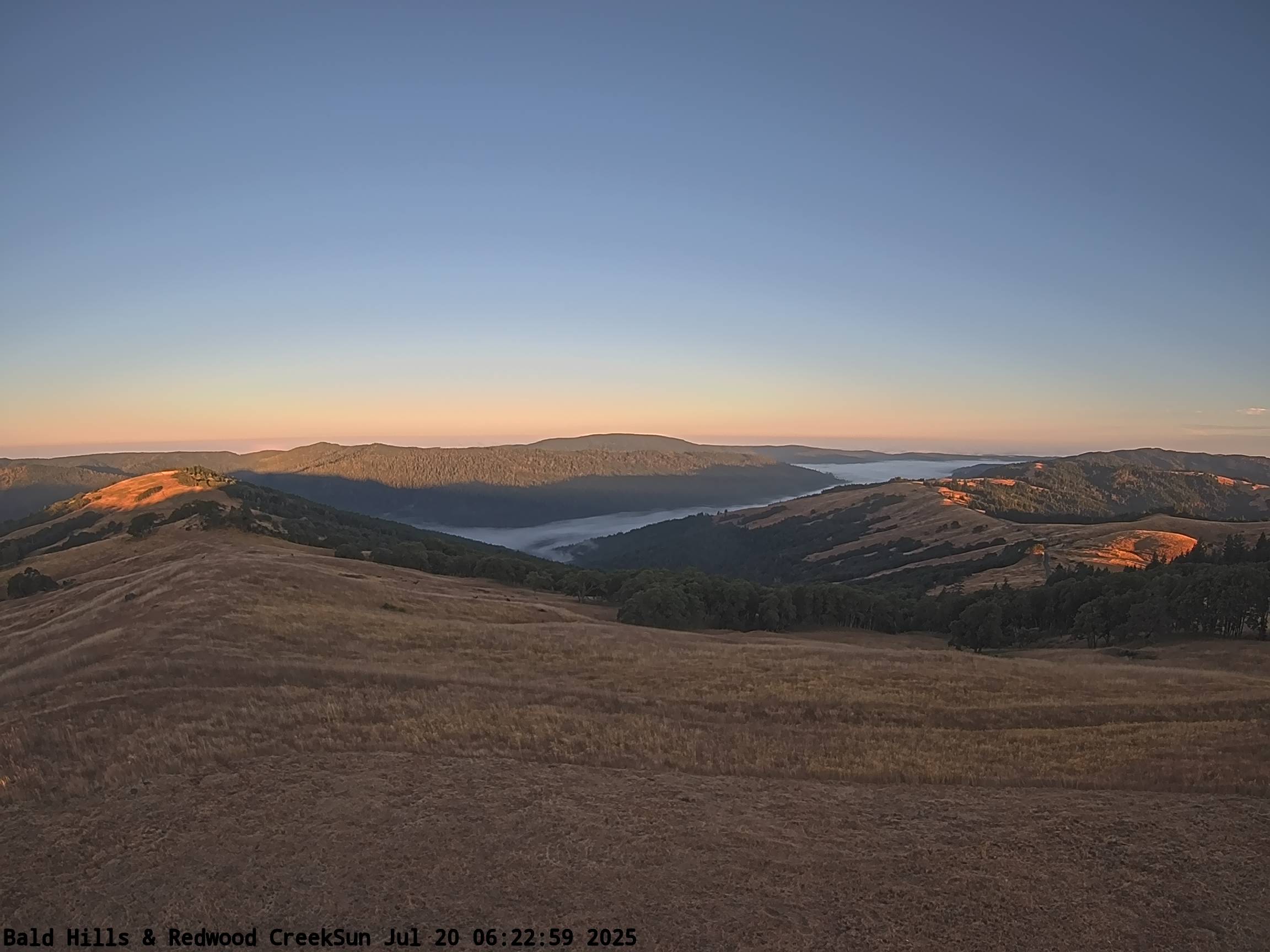
Redwood National and State Parks Webcam Views
Webcams provide a useful way to see what Northern California's redwood country looks like right now.
Depending on the camera location and current conditions, views may include towering redwood forests, coastal landscapes, rivers, beaches, fog, clouds, rain, and surrounding communities.
The region's famous marine fog can transform the landscape quickly, sometimes covering the coast while areas just a short distance inland remain clear.
Coast Redwood Forests
Redwood National and State Parks protect some of the most extraordinary forests on Earth.
Coast redwoods can grow more than 350 feet tall, making them the tallest trees in the world. Some have survived for many centuries, creating forests with enormous trees, ferns, moss-covered logs, and dense understory vegetation.
The cool, moist climate of Northern California's coast provides ideal conditions for these giants.
Fog is particularly important to the redwood ecosystem, providing moisture during the relatively dry summer months.
Redwood National and State Parks
Unlike most national parks, Redwood is managed through a partnership between the National Park Service and California State Parks.
The combined park system includes Redwood National Park, Jedediah Smith Redwoods State Park, Del Norte Coast Redwoods State Park, and Prairie Creek Redwoods State Park.
Together, these protected areas preserve redwood forests and a much larger ecosystem that includes wild rivers, oak woodlands, coastal prairies, beaches, and Pacific Ocean habitat.
Prairie Creek Redwoods State Park
Prairie Creek Redwoods State Park contains some of the most impressive old-growth redwood forest within the combined park system.
Trails wind beneath enormous trees and through lush fern-covered landscapes, while open prairie areas provide important habitat for Roosevelt elk.
The park also extends toward the Pacific coast, creating a remarkable transition from ancient forest to wild Northern California shoreline.
Jedediah Smith Redwoods State Park
Located near Crescent City and the Smith River, Jedediah Smith Redwoods State Park protects spectacular stands of old-growth coast redwoods.
The Smith River adds another dimension to the landscape, with clear water flowing through forested mountains before reaching the Pacific Ocean.
This northern portion of the redwood parks is known for dense forests, scenic drives, hiking trails, and exceptionally large trees.
Pacific Coast & Beaches
Redwood National and State Parks protect far more than forests.
Miles of undeveloped Pacific coastline include beaches, rocky headlands, sea stacks, tide pools, and coastal cliffs.
Fog and marine clouds are common, but clear days can reveal expansive views of the Pacific.
Winter storms can produce dramatic waves and powerful coastal conditions, while calmer summer weather often brings a mixture of sunshine and fog.
Wildlife in Redwood National and State Parks
The diversity of forest, river, prairie, and ocean habitats supports an equally diverse collection of wildlife.
Roosevelt elk are among the park's most recognizable animals and are frequently seen in prairie areas.
Visitors may also encounter black bears, deer, river otters, bald eagles, seabirds, and numerous smaller forest species.
Offshore waters support seals, sea lions, dolphins, and migrating whales.
Redwood National and State Parks Weather
The Northern California coast has a cool maritime climate.
Summers are generally mild, with coastal fog frequently developing during the morning and evening. Inland locations may become sunnier and warmer.
Fall can bring beautiful weather between Pacific storms, while winter is typically the wettest season. Heavy rain and strong coastal storms are possible.
Webcams can be particularly useful here because weather conditions can change substantially over relatively short distances.
Roads & Travel Through Redwood Country
US-101 is the primary highway through Redwood National and State Parks and connects many of the communities and major park areas along the Northern California coast.
Travelers may also use scenic park roads and local routes to reach trailheads, beaches, forests, and visitor areas.
Fog, heavy rain, fallen trees, road construction, and winter storms can occasionally affect travel.
The redwood region is also larger than many first-time visitors expect. Driving between the northern and southern sections of the parks can take considerable time, so planning by area can make exploring the parks much easier.
Why Watch Redwood National and State Parks Webcams?
- Check current Northern California weather
- See coastal fog and visibility
- View conditions around the redwood region
- Watch changing Pacific Coast weather
- Check conditions before hiking or sightseeing
- See seasonal changes in the forest and surrounding landscape
- Plan travel along US-101
- Experience California redwood country from anywhere
Redwood National and State Parks Webcams FAQ
Where are Redwood National and State Parks?
The parks stretch along the Northern California coast between the areas around Orick and Crescent City.
What is the closest town to Redwood National Park?
Several communities provide access to different sections of the parks. Crescent City is the largest gateway for the northern parks, while Orick provides convenient access to central and southern areas.
Are Redwood National Park and the state parks connected?
They are separate protected areas managed cooperatively as Redwood National and State Parks.
What highway runs through Redwood National and State Parks?
US-101 is the primary north-south highway through the region.
When is the best time to see the redwoods?
The parks can be visited year-round. Summer offers long days and generally milder weather, while winter brings more rain and fewer visitors.
Why is it so foggy in the redwoods?
Cool Pacific Ocean air frequently creates coastal fog. That moisture is also an important part of the coast redwood ecosystem.
Can I see Roosevelt elk in Redwood National and State Parks?
Yes. Roosevelt elk inhabit the parks and are particularly associated with open prairie areas.
Explore More California Webcams
Discover live webcams across California national parks, redwood forests, beaches, coastal communities, highways, mountains, lakes, wildlife areas, and scenic destinations.